School Box: A Playful Addition to Your Design Toolkit
In the world of typography, fonts serve as more than just a means of communication—they are visual storytellers. One such font that stands out for its whimsical charm and creative potential is School Box. This hand-crafted display font blends the nostalgia of school supplies with a modern aesthetic, making it a unique choice for designers looking to add a touch of fun to their projects.
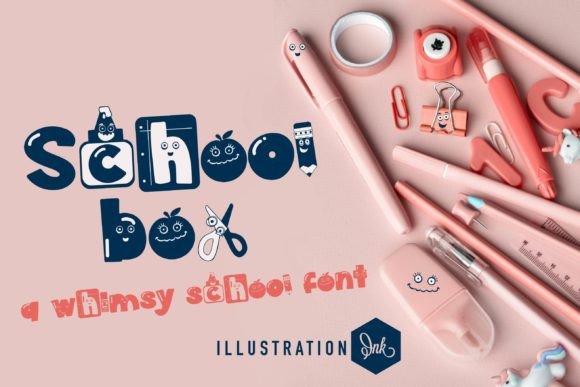
At first glance, School Box might seem like a simple font, but its design elements tell a deeper story. The font incorporates subtle references to everyday school items, such as pencils, erasers, and even small faces, which give it a personality that other fonts often lack. These details make School Box not just a typeface, but a visual experience that can evoke memories or spark creativity in the viewer.
One of the most appealing aspects of School Box is its versatility. While it may have a playful appearance, it can be used in a variety of contexts, from educational materials to branding for children's products. Its design allows it to maintain readability even at smaller sizes, making it suitable for headings, logos, and titles. This adaptability ensures that School Box can be integrated into different design workflows without compromising on style or functionality.
Characteristics That Set School Box Apart
What makes School Box truly unique is its attention to detail. Each character is designed with a sense of playfulness that doesn’t come at the expense of clarity. For example, the letter "A" might feature a small pencil tip at the top, while the letter "B" could have a subtle eraser-like shape on its side. These small touches add a layer of visual interest that can make a design stand out in a crowded market.
The font also includes a range of alternate characters, allowing users to customize their designs further. This flexibility is especially useful for designers who want to create a cohesive look across multiple elements, such as a website, social media posts, or printed materials. By using these variations, designers can ensure that their work remains fresh and engaging without relying on generic typography.
Another notable feature of School Box is its ability to convey a sense of warmth and approachability. In a digital landscape where many fonts lean toward a more formal or minimalist style, School Box offers a refreshing alternative. It’s particularly well-suited for projects that aim to connect with younger audiences or evoke a sense of nostalgia. Whether it’s for a children’s book, a classroom project, or a marketing campaign targeting families, School Box can help create an emotional connection with the audience.
Practical Applications of School Box
Designers and creators often seek fonts that can enhance the visual appeal of their work while maintaining readability. School Box fits this need perfectly. For instance, in the realm of education, this font can be used to create engaging learning materials, such as flashcards, worksheets, or interactive presentations. Its playful nature can make learning more enjoyable for students, encouraging them to engage with the content in a more active way.
Beyond the classroom, School Box has found a place in the world of branding and marketing. Companies that cater to children or focus on educational toys can use this font to create a consistent visual identity that resonates with their target audience. By incorporating School Box into their logos, packaging, or promotional materials, these businesses can establish a friendly and approachable brand image that sets them apart from competitors.
Additionally, School Box is a great choice for personal projects, such as handmade greeting cards, DIY crafts, or social media content. Its hand-crafted feel adds a personal touch that can make these creations more meaningful. For hobbyists and artists, this font offers a way to express creativity while maintaining a professional finish, making it a valuable addition to any digital or physical design project.
Considerations When Using School Box
While School Box is a versatile and expressive font, it’s important to consider its limitations. Due to its detailed design, it may not be the best choice for large blocks of text. In such cases, it’s advisable to pair School Box with a more traditional sans-serif or serif font to ensure readability and balance. This combination can help maintain the visual interest of the design while keeping the content accessible to all readers.
Another consideration is the context in which School Box is used. While it works well for casual or creative projects, it may not be appropriate for formal or professional settings. Designers should assess the tone and purpose of their work before deciding to incorporate School Box into their designs. Understanding the audience and the message they want to convey is essential in making the right typographic choices.
Finally, it’s worth noting that School Box is best suited for digital and print applications where visual impact is a priority. Whether it’s for a website header, a poster, or a product label, this font can add a distinctive flair that captures attention. However, designers should also be mindful of how the font looks in different formats and sizes, ensuring that it maintains its intended effect across various mediums.
In conclusion, School Box is more than just a font—it’s a creative tool that can bring a sense of fun and personality to any design. Its unique blend of school-themed elements and modern aesthetics makes it a standout choice for designers looking to differentiate their work. By understanding its characteristics, applications, and considerations, users can effectively harness the potential of School Box to enhance their visual storytelling and connect with their audience in a meaningful way.